















"Mom, my tooth hurts."
Those four words can stop you in your tracks. One minute your child is happily eating dinner, the next they’re holding their cheek and refusing another bite. You start wondering: Did they bite something too hard? Is it a cavity? Could it be something serious?

Tooth pain in children can be confusing for parents. Sometimes the discomfort comes and goes. Other times, the pain is constant and leaves your child in tears. Either way, it’s stressful trying to figure out when to watch and wait versus when to call the dentist right away.
Let’s walk through the most common reasons kids complain of tooth pain, how to tell what might be going on, and what steps you can take to ease both your child’s discomfort and your own worries.
Common Reasons Kids Get Tooth Pain
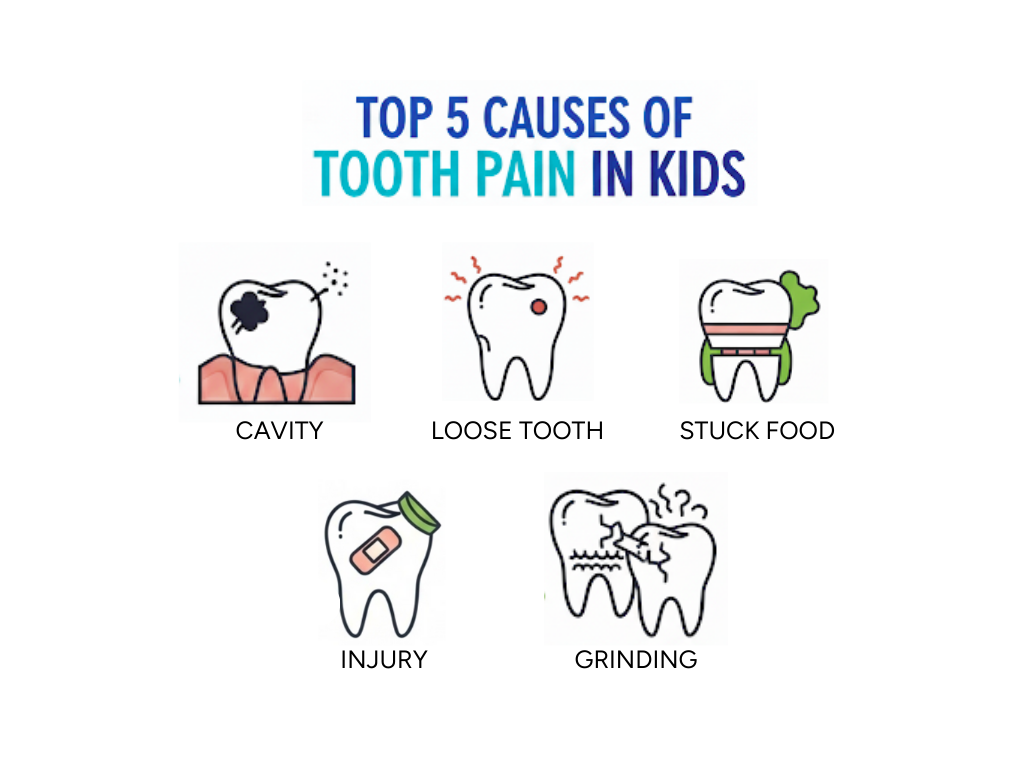
Toothaches in children aren’t always from cavities, though that’s often the first thing parents think about. Some of the most common causes include:
- Cavities: Small holes caused by bacteria and sugar that can irritate the inner tooth.
- Loose or erupting teeth: Pain from baby teeth falling out or permanent teeth pushing through.
- Gum irritation: From popcorn kernels, food stuck between teeth, or early gum infection.
- Dental trauma: A cracked or chipped tooth from a fall or sports injury.
- Grinding or clenching: Often at night, leading to sore teeth and jaws in the morning.
How to Tell if It’s Serious

As a parent, you don’t need to diagnose the problem. But you can look for clues:
- Location: If your child can point to one specific tooth, it may be a cavity or injury.
- Swelling: Puffy gums or cheek swelling may suggest infection and need urgent care.
- Temperature sensitivity: Pain when drinking hot or cold liquids often means nerve involvement.
- Duration: Pain that lasts more than a day or two should always be checked by a dentist.
If your child is unable to sleep, eat, or if swelling is present, it’s time to call your dentist right away.
What You Can Do at Home First

While waiting for your dental appointment, here are safe ways to help:
- Rinse gently with warm salt water to clean the area.
- Floss carefully to remove any trapped food.
- Use over-the-counter pain relief appropriate for your child’s age and weight.
- Apply a cool compress to the cheek for comfort.
Avoid putting aspirin directly on the gums—this can burn the tissue.